
Showing posts with label War. Show all posts
Showing posts with label War. Show all posts
Friday, April 22, 2022
Bomb: The Race to Build and Steal the World's Most Dangerous Weapon by Steve Sheinkin


Monday, January 03, 2022
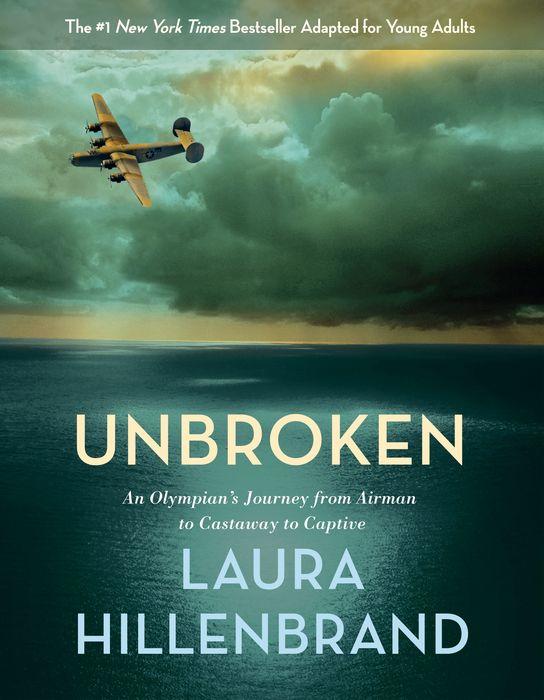
Unbroken (The Young Adult Adaptation): An Olympian's Journey from Airman to Castaway to Captive by Laura Hillenbrand
Tuesday, February 16, 2021
War Stories by Gordon Korman

Tuesday, May 26, 2020
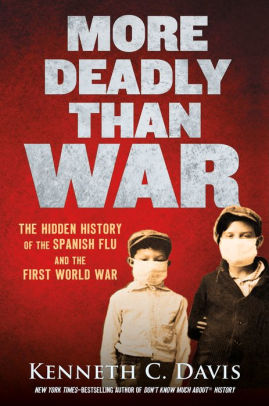
More Deadly Than War: The Hidden History of the Spanish Flu and the First World War by Kenneth C. Davis
Monday, April 27, 2020
Dread Nation by Justina Ireland

Monday, January 13, 2020
Grenade by Alan Gratz

The Night Diary by Veera Hiranandani

Monday, January 26, 2015
Persepolis by Marjane Satrapi

Saturday, August 10, 2013
Torn by David Massey

Tuesday, February 26, 2013
The Fighting Ground by Avi

Tuesday, June 19, 2012
Code Name Verity by Elizabeth Wein

Saturday, November 19, 2011
A Long Walk to Water by Linda Sue Park

Friday, August 12, 2011
Bloody Times by James L. Swanson

I am a huge fan of Chasing Lincoln’s Killer, by the same author. It’s one of my all-time favorite nonfiction books for middle school boys because it reads just like a fiction story with an incredible amount of action and intrigue. Bloody Times is in many ways a companion to Chasing Lincoln’s Killer. It details the days following Lincoln’s assassination from two perspectives—the long, drawn-out funeral train journey that took Lincoln home to rest in Springfield, Illinois, and the actions of Jefferson Davis in the days and weeks immediately following Lincoln’s death. Both stories were mostly unknown to me and are quite interesting from my adult point of view. I don’t think this book will be quite as fascinating to kids as it was to me, though. The stories lack the drama (and violence) of the manhunt for John Wilkes Booth which made the first book so compelling. It’s still definitely worth reading, though, and I would recommend it especially to history teachers and students with an interest in history.
Thursday, February 17, 2011
Forge by Laurie Halse Anderson
 This is the sequel to Chains and the story begins several months after Isabel and Curzon escape from New York City. This time Curzon is the narrator and he and Isabel have separated—she to go south to find her sister and he to join the Continental Army. Curzon thinks joining the army will guarantee him food and shelter for the winter but unfortunately this is the winter that the army spends in absolute misery at Valley Forge. In the beginning I felt like the book was a vehicle for describing the awful conditions the soldiers faced at Valley Forge. But the plot picked up when Curzon and Isabel are reunited (now both back in bondage) and begin once again to plan an escape. By the end I was fully engaged in Curzon and Isabel's story and also thinking about the contradictions inherent in the founding of our country. A must-read for those who read and enjoyed Chains.
Monday, February 07, 2011
Leviathan by Scott Westerfeld
 I confess that I had a lot of trouble getting into this story. I listened to the audiobook and at first it was hard to follow some of the language about Clankers and Darwinists and boffins. But it did turn out to be a really good book with some extremely cool technological ideas. It is the dawn of World War I and, as in real life, the Archduke Ferdinand is murdered, which sets all of Europe on the course toward war. In this fantasy world the Archduke has a son named Alek, whose advisors try to whisk him off to safety in nearby Switzerland. They travel in a Stormwalker—a huge walking armored vehicle created by the Clankers (the German-Austrian-Hungarian faction of the war). Meanwhile, in England a young girl named Daryn is disguising herself as a boy in order to enlist in the British air force. She gets a position on the Leviathan—a huge airship made of genetically modified creatures. (The British are Darwinists and they can manipulate DNA in amazing ways.) The crews of the Leviathan and the Stormwalker meet in the mountains of Switzerland and the lines between enemies and allies blur as Alek and Daryn form a tentative friendship. The story was good and the world of Clankers and Darwinists was also pretty fascinating. If you like this kind of story (often called steampunk) you should also try Airborn by Kenneth Oppel and Mortal Engines by Philip Reeve.
Friday, October 16, 2009
The Boy Who Dared by Susan Campbell Bartoletti
 If you read this author's outstanding nonfiction book called Hitler Youth, then you have heard of Helmuth Hubner, the German teenager who was executed by the Nazis for daring to speak against Hitler. In this historical novel Bartoletti takes the facts of Hubner's life and works them into a story that will be eye-opening to many readers. You know from the beginning that Helmuth is imprisoned and could be executed at any time. Through a series of flashbacks you see how he grew from a trusting boy to a teenager who saw through Nazi propaganda and lies and dared to speak against them. Helmuth's weapon was his own intelligence and ability to write. His crime was distributing pamphlets that spoke against Hitler. Readers will see how he secretly listened to British radio broadcasts, selectively involved a few of his friends, and ultimately was betrayed but never lost his courage or moral outrage. Looking back we all like to think we would have done the same, but I think very few people could have shown his bravery. Recommended for readers with an interest in World War II or history in general. This doesn't have war action like Soldier X or Soldier Boys, but it goes a long way in explaining the terrifying conditions in Germany and the reasons for Hitler's rise to power.
Monday, June 08, 2009
War Horse by Michael Morpurgo

I love Michael Morpurgo's books, especially Private Peaceful, but I never had read this one before, probably because I knew it was narrated by a horse. But I had a 7th grade student read it and love it so I decided to try it myself. Joey, the horse telling the story, was a farm horse before he was taken to be in the World War I cavalry. In this book you see the horrors of war through Joey's eyes and limited perspective. Joey is repeatedly a victim of human violence but through it all finds numerous kind, empathetic human beings who care for him and love him. Any realistic book about World War I battles might just be too much to take—it was a horrible war. But through the eyes of Joey the story is accessible to kids and readers will definitely sympathize with Joey and hope that he is someday reunited with his beloved master. Recommended for readers who want to read about war but who might not be ready for more gritty books such as Soldier X or Fallen Angels.
Wednesday, May 27, 2009
All the Broken Pieces by Ann E. Burg
 Matt Pin was airlifted out of Vietnam, never to see his biological mother and brother again. Two years later he has been adopted by an American family and is struggling with the memories of all that he left behind. He's a good baseball player and has a wonderful coach but he faces racism from some of his teammates. This is the moving story of how he comes to terms with his past and a secret that is too painful to share. It's written in free verse and is easy to read quickly, but it's so well written you may want to slow down and savor every word. Although it's historical fiction, it will also appeal to sports fans due to the baseball theme running throughout the book. A couple of 8th grade boys read and loved this one already so it comes highly recommended.
Friday, January 23, 2009
I'll Pass for Your Comrade: Women Soldiers in the Civil War by Anita Silvey
 This book is both fascinating and frustrating. It tells the stories of many women who, disguised as men, fought in the American Civil War. This was not an isolated thing—we know for sure that hundreds of women did this for various reasons. Some for adventure, others to follow husbands or brothers, and others to escape from poverty. The stories that we do know about these women are fascinating. The frustrating part is that we will never know the details of most of these women's lives. There are many tidbits in this book (such as women giving birth as prisoners of war) that are so intriguing, yet we never can know the details of their dramatic lives (How did they hide it? What happened after they gave birth? What did their families back home think of them?). Silvey has researched these women for years and what is known is well-told in this book. It's particularly fascinating to look at the photos of some of these women, both in uniform and in traditional dress.
Wednesday, January 14, 2009
Chains by Laurie Halse Anderson
 Finally a book that I could not put down! I have not been very excited about very books published in 2008, but this one was fantastic. It's set during 1776 when patriots and loyalists were fighting it out over liberty. But we forget that many people in the colonies were slaves and neither side was talking about truly giving freedom to all people. Isobel and her sister Ruth are supposed to gain their freedom when their mistress dies but instead they are sold to a New York couple loyal to the King of England. They are transported to New York City, forced to work extremely hard, and treated poorly by their new owners. This is Isobel's story as she struggles to find a way out of slavery while all around her soldiers are preparing for war and her only friend is imprisoned and near death. When her sister, Ruth, is taken from her she loses hope but later regains it. Isobel is a determined, believable character and her situation is both heartbreaking and hopeful. The horrors of slavery are not glossed over, and there's lots of history here, so I think it will be most appreciated by readers seventh grade and up through adults. Social studies teachers should definitely read this one.
Subscribe to:
Posts (Atom)