Showing posts with label History. Show all posts

Monday, July 06, 2026

The Circuit (Graphic Novel Edition) by Francisco Jiménez, adapted by Andrew J. Rostan and Illustrated by Celia Jacobs

This story begins in the late 1940s with a Mexican family dreaming of going to California to find work and a better life. Francisco's family finally does cross the border and his childhood is spent moving from camp to camp, picking cotton and grapes and strawberries in the hot sun. At first young Francisco takes care of his baby brother in the backseat of a car while the family picks cotton, but soon he is old enough to work in the fields. But what he dreams of is staying in one place so he can learn to read and learn English. It is heartbreaking to see him pulled out of school each year, but he does learn to read and write and we know he will grow up to be an acclaimed writer. This graphic novel adaptation of Francisco Jiménez's original memoir is perfect for middle and high schoolers. There is drama and adventure, but it is mainly a story of family and hardship and a boy who dreams of a better future. The ending is unresolved, but students could read Jiménez's other memoirs to find out more of his story. The Circuit is highly recommended, both for pleasure reading and for nonfiction or memoir units. 
 

Wednesday, November 27, 2024

The Windeby Puzzle by Lois Lowry


If you've ever heard of bog people, you might find this book interesting. The Windeby Child is a 2,000 year old human body that was uncovered in 1952 in a peat bog in Germany. Due to the chemical conditions in a peat bog, ancient bodies are occasionally preserved, including their hair and clothing and skin. When modern people find them, the bodies are studied by scientists and preserved in museums. Some bog people appear to have died violent deaths, or have clearly been murdered, but not the Windeby Child. This particular body at first appeared to be a young woman with half of her head shaved and a blindfold around her eyes. Scientists later determined that the body was a young boy, and his hair had not been shaved. Lois Lowry took the interesting story of the Windeby Child and imagines the life of this child and what could have led to their death at a young age. We know very little about the people who lived in northern Germany at that time, but Lowry found out what she could and in this book she tells two possible stories to explain the puzzle of the Windeby Child. The first story assumes that she was a 13-year-old girl who meets a violent end due to her aspirations of being a warrior. The second story is one of an unloved orphan teenager who shows the curiosity of a scientist before succumbing to disease. Both stories show young teenagers living a harsh life in a society that does not treat children kindly. As a middle school librarian, I appreciate that Lowry is writing for and about young teens--there is mention of human sacrifice and adultery that makes this book more fitting for 6th-8th graders. It is not a long book and with some encouragement, it should appeal to young teens who like history, solving puzzles, and learning new things. 

Tuesday, May 23, 2023

American Murderer: The Parasite that Haunted the South by Gail Jarrow
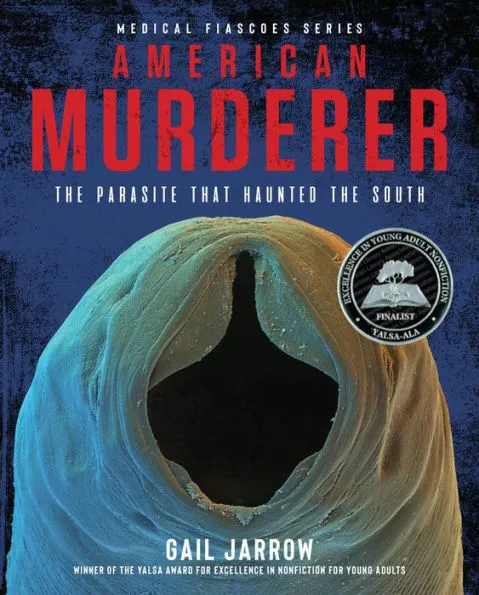
 

The picture on the cover of this book is a close up of a hookworm that latches onto the intestinal wall of human hosts, sucking away their nutrition like a vampire. This nonfiction book tells the story of how hookworms infected people in the United States in the 1800s and early 1900s and of the scientists who discovered why people were sick, exhausted and unable to work or study. It took years to convince government officials of the problem and years to find ways to get treatment to the people who needed it most--mainly rural southerners. Gail Jarrow has researched this topic and presents it with many photos and a fascinating narrative. Anyone (or any age) interested in public health or history will want to read this book. Highly recommended for middle schoolers on up to adults. 

Underground Fire: Hope, Sacrifice, and Courage in the Cherry Mine Disaster by Sally Walker
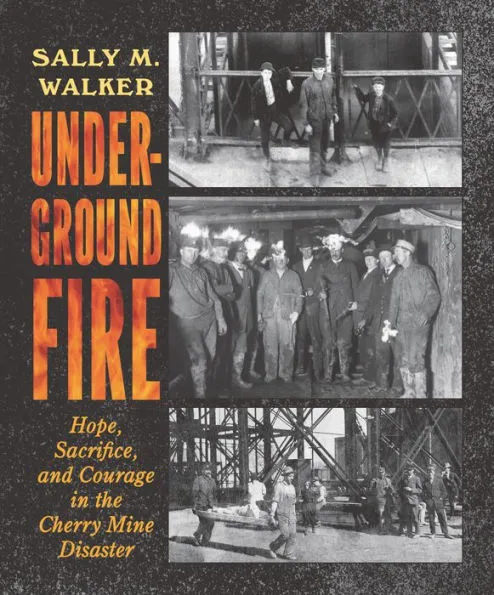
 

The year is 1909 and almost 500 men are working underground in a coal mine in Cherry, Illinois. Many of the men are immigrants to the United States, some are just teenagers, and all of the men have families counting on their income for food and shelter. An underground fire breaks out that has disastrous consequences for many of the miners. This detailed nonfiction book was absolutely fascinating to me as an adult reader. Sally Walker is a master researcher and writer and I would read any book she writes. There are stories here of the women and children left behind, and the desperate attempts by miners trapped underground to keep themselves alive until help comes. Highly recommended for nonfiction readers--but truth be told, this is probably a book that will have more appeal to adults than to children because it's so detailed and nuanced. 

Tuesday, January 26, 2021

Glitch by Laura Martin


Imagine a future in which time travelers are going back in time and trying to change history. It sure seems like there are things that should change. But then imagine that any change could be disastrous to future people and future progress. Regan and Elliot are two kids who are training to go back in time to stop illegal travelers (called "butterflies") from changing the future. Regan and Elliot have never been friends, but a forbidden message from their future selves tells them that they must work together to stop a disaster from happening. This is an action-packed story that grabs your attention right from the first moment that Regan is in Ford's Theatre trying to find a "butterfly" who is thwarting the Lincoln assassination. These kids are brave and smart and break a lot of rules. Recommended for middle schoolers, especially fans of Stuart Gibbs and Gordon Korman.  

Tuesday, May 26, 2020

More Deadly Than War: The Hidden History of the Spanish Flu and the First World War by Kenneth C. Davis
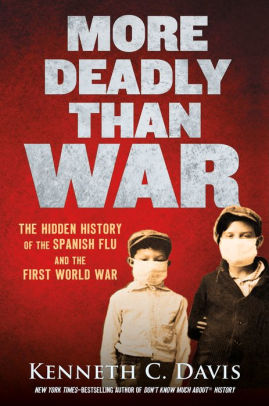
This book starts with a shocking story of Alaskan villages wiped out by a mysterious illness. Seventy-two out of 80 inhabitants of a village died in a 5-day period. It goes on to tell how the 1918 influenza epidemic, commonly known as the Spanish flu, actually emerged at an army camp in Kansas in March of 1918. From there, it spread to American military training camps and across the ocean to Europe, where it attacked soldiers on all sides of the Great War. One striking thing about this global pandemic is how little we know about it today, partly because governments purposely suppressed information about the disease during wartime and partly because traumatized people wanted to forget about it. Although it killed over 600,000 Americans, and millions worldwide, this global pandemic has largely been lost to history. This account deals largely with the disease and its connections to World War I. There is less coverage of how the disease affected women, children, civilians back at home, and people of color. From the vantage point of 2020, it would have been fascinating to read more about how communities handled school closures, commerce, public gatherings, and social distancing. Younger readers may get bogged down by war details in the middle, but the opening few chapters and concluding chapters are stunning. Now that we are in the midst of another disease outbreak, this very timely book will be of interest to young people and adults alike. With so much here that connects to the COVID pandemic, this is a must-have book for libraries everywhere.

Monday, May 04, 2020

Never Caught, the Story of Ona Judge: George and Martha Washington's Courageous Slave Who Dared to Run Away by Erica Armstrong Dunbar and Kathleen Van Cleve

Ona Judge is an American hero that most people don't know. She was enslaved by George and Martha Washington and she dared to stand up against the president of the United States by fleeing to freedom. There is much that is not known about Ona Judge's life, but these authors have put together many puzzle pieces in order to paint a vivid picture of her life and the difficulty she faced when she dared to escape to freedom. We learn about the struggles of the enslaved people at Mt. Vernon as well as life in Philadelphia and New York City in the late 1700s. I was fascinated to learn about the evolution of abolitionist thought and how laws were made to protect slave owners, even in the north. Many Americans grow up learning only positive things about our country's founding fathers, especially George Washington, but this book shows them as the flawed people that they were. Ona's story should be widely known, and I recommend this excellent book to readers of all ages.

Thursday, April 23, 2020

Stamped: Racism, Antiracism, and You by Jason Reynolds and Ibram X. Kendi

Racist ideas are woven into the fabric of the United States of America. The ideas are so deeply ingrained in our history that many of us don't see them or understand that they affect every aspect of society today. Stamped, which claims not to be a history book, traces the history of racist ideas and how Americans, who wanted the money and power that slavery gave them, created the idea of Africans being savages. From that early premise, Reynolds takes us up through the present day showing how pervasive the idea and policies that maintain it have become. Jason Reynolds is a master writer for young people, and he speaks directly to the reader in an honest and compelling tone. Reynolds is the reader of the audiobook, and is also an excellent narrator. As an adult reader, I was alternately shocked, captivated, and enraged at how often the history I learned in school could be viewed through such a different lens. I wanted to argue, to disagree, but in the end I cannot. It will only end when we acknowledge the power that racist ideas hold and we do the hard work of dismantling this system that is really all about who has privilege and who does not. This powerful book deserves to be read slowly and carefully and to be discussed in schools and churches and communities. I recommend it for all adults, as well as students in 8th grade and up,  There's an excellent educator's guide as well.

Thursday, January 03, 2019

The Da Vinci Code (The Young Adult Adaptation) by Dan Brown

This YA adaptation of what the New York Times calls a "brainy thriller" has all the excitement of the adult edition, which I read years ago and loved, but had mostly forgotten. Dan Brown brings the reader immediately into the action, where a Louvre curator rips a painting off the wall to bring down the security gate that might save him. He is, however, shot by an assassin, and in the 20 minutes it takes him to die, is able to leave a coded treasure hunt for his granddaughter and Harvard professor Robert Langdon to unravel. The book's short chapters are the perfect way to keep readers on the edge of their seats as secret after secret is revealed. The book spares none of the intrigue or the sometimes confusing plot that sees two secret societies battling it out over a secret that could bring down western society (or at least bring down the Catholic church, or so they say). There is so much art and culture and historical context in this book--I hope that bright kids will find it to be an introduction to a whole world of thrillers and action books, or maybe even religion and art history. The Da Vinci Code is like nothing else found in YA literature. It definitely belongs in middle and high school libraries. (For those who remember the steamy pagan ritual from the original, it is included in the book but the details are glossed over to the point that readers might not quite understand what made Sophia distance herself from her grandfather for ten long years. I'm discussing this book with 8th graders next week--I'm anxious to see what their take is on that and on the book as a whole.)

Wednesday, November 30, 2016

The Plot to Kill Hitler by Patricia McCormick
Dietrich Bonhoeffer was a young man in Germany in the years leading up to World War II. He chose to become a pastor, and believed strongly in peaceful resolution of conflict. However, Bonhoeffer began to witness great evil building up around him in the Nazi regime that was taking over his country. As the Nazis began to strip Jewish citizens of their rights, they also took away the right of free speech for all Germans. Bonhoeffer believed that the church should speak out against Hitler but could not find other religious leaders willing to speak up. In short, readable chapters, McCormick tells how Bonhoeffer tried in many ways to alert other governments to the horrors that Germany was inflicting on Jews and how Bonhoeffer eventually came to the conclusion that to do nothing in the face of evil was to be evil yourself. He became a spy and joined in a plot to kill Adolf Hitler and overthrow his government. His was an incredibly courageous life, and even though he was killed by the Nazis, there is much to learn from his example.

Thursday, July 30, 2015

Turning 15 on the Road to Freedom by Lynda Blackmon Lowery

There is a lot of interest in the Selma voting rights march and this memoir makes Selma and the preceding marches come alive from the perspective of a young person. Lynda Blackmon was actively participating in civil rights protests in Selma before the famous march to Montgomery. In this memoir she talks about how those marches were organized and how her black teachers helped students leave school to participate. Lynda was jailed numerous times and often was fearful, but she continued to participate and was supported by her family and friends. She was beaten on Bloody Sunday, and then became the youngest person to march all the way from Selma to Montgomery. It was on that march that she turned 15 years old. This story is told in the first person and is easy to read. It is written in chapters but it reads like a personal essay. Students as young as fifth graders will have no problem understanding Lynda's story and will learn a great deal about the events surrounding the Selma march, including the deaths of Jimmie Lee Jackson and Viola Liuzzo. This would be an excellent addition to a middle school Civil Rights unit.

Saturday, March 29, 2014

Lincoln's Grave Robbers by Steve Sheinkin
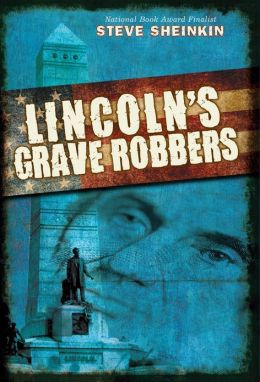
Did you know that the U.S. Secret Service started out as a group of men who were working to stop counterfeiters from producing fake money? Back in the 1800s is was relatively easy to create counterfeit money, but it was difficult to actually make really good counterfeit bills. A man named Benjamin Boyd was very good at making fake money, and he made a lot of money at it. But he ended up in prison, and that's when a group of Chicago men came up with a plan to get Boyd out of prison. Strangely enough, that plan included stealing the dead body of President Abraham Lincoln and holding it for ransom. This book tells the story of the grave robbing plot as well as the story of the Secret Service agent whose job it was to stop the robbery. The book is a quick read that includes photographs of the people and places involved. I learned a lot from this book, and enjoyed adding to my knowledge of United States history. There are many characters, both good guys and bad guys in this story, and the hardest thing about this book was keeping track of who was who. Recommended for 6th grade and up.

Tuesday, August 28, 2012

The Fairy Ring: Elsie and Frances Fool the World by Mary Losure

This nonfiction book may need some selling to get it in the hands of readers. The background story is this—during World War I a couple of English girls took photos of themselves with paper fairies in them. The photos were later discovered and thought to be real photos of fairies. Elsie and Frances gained a lot of fame and scrutiny for the photos but didn't let on that they were a hoax for many decades. This is the story of how and why they took the photographs, and why educated people in the early 1900s (included Sir Arthur Conan Doyle) believed in photographs of fairies. It's a relatively short, easy read about a strange piece of history. A fun and fascinating work of nonfiction for intermediate and middle school readers.